
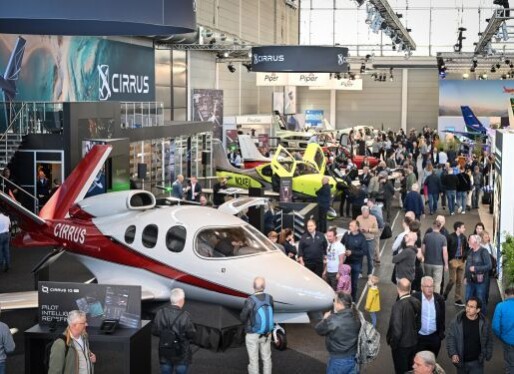
Imagine standing on the shores of Lake Constance, the crisp April air buzzing with the hum of engines and the chatter of aviation enthusiasts from across the globe. That’s the magic of Friedrichshafen, where “aero news Germany” truly comes alive each year. As we dive into this vibrant world of wings and rotors, it’s clear that Germany’s aviation scene isn’t just keeping up—it’s leading the charge toward greener skies and bolder innovations. From electric dreams taking flight to defense deals that fortify Europe’s backbone, the stories unfolding here are nothing short of inspiring. Buckle up, folks; we’re about to explore how this powerhouse nation is reshaping the aerospace landscape, one breakthrough at a time.
Germany’s aerospace heritage runs deep, woven into the fabric of its industrial might. Think of the Wright brothers’ early inspirations or the post-war boom that birthed giants like Airbus and MTU Aero Engines. Today, as we hit December 2025, the sector’s buzzing with optimism. Revenue climbed to €52 billion last year, and experts are eyeing even sunnier prospects ahead. It’s not hyperbole to say that “aero news Germany” is the pulse of European innovation, blending precision engineering with a dash of that famous Teutonic efficiency. And hey, with over 120,000 jobs on the line, it’s not just about planes—it’s about powering dreams and livelihoods.
The Thrill of AERO Friedrichshafen 2025: Where Ideas Take Wing
Ah, AERO Friedrichshafen—Europe’s crown jewel for general aviation. Held from April 9 to 12 this year, the 31st edition smashed records, drawing 32,100 visitors from 80 nations and 760 exhibitors from 38 countries. Picture this: halls packed with gleaming ultralights, helicopters thumping overhead, and families wide-eyed at static displays of everything from gliders to business jets. It’s like a family reunion for flyboys and girls, complete with that upbeat vibe that makes you forget the long lines for coffee.
What made 2025 special? Sustainability stole the spotlight, of course. Electric propulsion wasn’t just a buzzword; it was everywhere. Chinese firm Rhyxeon unveiled the RX4E, the world’s first four-seat electric aircraft, zipping around on zero emissions. Meanwhile, student teams from Aero Delft tested liquid-hydrogen systems, proving that young minds are fueling tomorrow’s skies. And let’s not overlook the AERODrones pavilion in Hall B4, now cozied up next to the Helicopter Hangar—perfect for cross-pollinating ideas on unmanned tech.
But it’s not all show and no go. The event doubled as a networking powerhouse, with pavilions from China, the Netherlands, and German powerhouses like Baden-Württemberg showcasing eco-friendly wizardry. EASA experts mingled at Stand A5-300, dishing out safety tips and career advice during AERO Career Days. Oh, and the app? A game-changer, offering interactive maps and exclusive deals—because who wants to wander lost when there’s flying to be done?
In the end, AERO 2025 wasn’t just an event; it was a beacon, reminding us that “aero news Germany” thrives on collaboration. As Tobias Bretzel, the show director, put it, it’s about “dreaming, building, flying.” And boy, did we dream big.
Germany’s Aerospace Titans: Pillars of Precision and Power
When it comes to heavy hitters, few nations boast a lineup like Germany’s. Airbus Defence and Space, with its 46,000-strong workforce, isn’t just a name—it’s a synonym for excellence. From the A400M’s rugged versatility to the Eurofighter’s razor-sharp agility, these birds keep skies safe and borders secure. Then there’s MTU Aero Engines, churning out powerplants that whisper efficiency while roaring capability. And don’t get me started on OHB SE, the space wizards turning satellites into everyday heroes.
Take Deutsche Aircraft, for instance. They’re resurrecting the Dornier 328 legacy with the D328eco, a sub-50-seater that’s all about zero-emission vibes. Set for market entry in 2027, it’s got operational flexibility that could open routes in the trickiest terrains. Their Leipzig final assembly line? Roofing’s underway, with move-in slated for December 2025—talk about on-track optimism!
| Company | Key Focus | 2025 Highlights | Workforce Impact |
|---|---|---|---|
| Airbus Defence & Space | Military aircraft & systems | A400M unpaved runway tests; Eurofighter upgrades | 46,000+ employees |
| MTU Aero Engines | Engine innovation | PW127XT-S deliveries for D328eco | 11,000 specialists |
| OHB SE | Space systems | €35B space defense pledge contributions | 3,200 innovators |
| Deutsche Aircraft | Regional sustainable flight | TAC 1 rollout; hydrogen tech partnerships | Growing to 1,000 by 2026 |
These giants aren’t resting on laurels. With 584 manufacturing firms and 624 service providers, Germany’s ecosystem is a well-oiled machine. It’s optimistic stuff—projected growth to $33.16 billion by 2033 at a 7.11% CAGR. As one exec quipped, “We’re not just building planes; we’re building futures.” And in “aero news Germany,” that future looks sky-high.
Electric Horizons: Germany’s Charge Toward Green Skies
Let’s face it: aviation’s carbon footprint has been a thorn in the side for too long. But Germany’s flipping the script with electric fervor that’s downright exhilarating. VÆRIDION’s new battery facility at Oberpfaffenhofen Airport? It’s repurposing Lilium’s old digs for experimental flights, pushing eVTOL boundaries. Wisk Aero’s teaming up with Liebherr-Aerospace for Gen 6 actuation systems—safety first, always.
Over at Munich Airport, hydrogen-powered ground vehicles just rolled out their pilot fleet. Imagine baggage carts sipping H2 instead of guzzling fuel—it’s a small step, but heck, it adds up. And the DLR’s morphing wing tests? That Shapeshifter could slash drag by 20%, making flights smoother and greener.
- Battery Breakthroughs: VÆRIDION’s setup authorizes test flights, blending reuse with renewal.
- Hydrogen Hype: €25 million budgeted for aeronautics research, targeting climate-neutral ops by 2050.
- eVTOL Edge: Partnerships like UniSQ-DLR’s hypersonic microgravity tests pave ways for efficient avionics.
It’s not without hurdles—certification’s a beast—but the momentum’s infectious. As contrail-measuring campaigns from new engines wrap up for EU’s A4Climate, we’re seeing data that could rewrite flight paths. Optimism abounds: Germany’s aviation research program is ramping up hybrid-electric funding, proving that green doesn’t mean grounding progress.
Defense Dynamics: Fortifying Europe’s Aerial Shield
Shifting gears to the serious stuff, Germany’s defense aviation is bulking up like never before. The Future Combat Air System (FCAS)? It’s the talk of Berlin and Paris, with a mid-December 2025 deadline looming for a breakthrough. Sure, tensions simmer between Airbus and Dassault over workshares—Germany’s unions are vocal about not sidelining Manching—but political heavyweights like Macron and Merz are pushing for unity. A €100 billion “system of systems,” complete with stealth fighters and drone swarms? That’s the stuff of strategic dreams.
Eurofighter Typhoon’s getting love too: 20 new Tranche 5 jets for €3.75 billion, deliveries from 2031. Plus, 15 more F-35s to stealth up the fleet. Boeing’s $876 million Chinook deal? 60 choppers for the Bundeswehr. And Airbus helicopters? Another 20 for €1 billion. P-8A Poseidons landed first at Berlin Brandenburg, ditching aging Orions for maritime muscle—four more on the wishlist.
- FCAS Flashpoints: Engine challenges hit 11-ton thrust needs; Safran-MTU collab could crack it.
- Missile Modernization: Taurus KEPD 350 upgrades for deep strikes.
- Drone Defenses: New laws greenlight shooting down rogue UAVs near infrastructure.
Amid drone swarms over ammo depots, a counter-drone unit launched December 3—tech-savvy interception at its finest. Arrow-3 SAMs bolster high-altitude shields, while Helsing’s CA-1 Europa combat drone hints at AI-driven futures. It’s gritty, yes, but oh-so-reassuring. As Defense Minister Pistorius eyes alternatives if FCAS stalls, one thing’s clear: Germany’s not backing down.
Sustainable Soar: Eco-Innovations Lighting the Way
Sustainability isn’t a side gig in Germany—it’s the main event. The aviation tax rollback, fully in by mid-2026, eases airline burdens while nudging greener ops. Eurowings’ winter 2025/26 schedule? Medium-haul expansions that scream recovery. Air travel’s up 4.6% this summer, inching toward 2019 peaks.
DLR’s GAsFEx-2 hypersonic mission with UniSQ? Six minutes of microgravity data for avionics gold. Stratospheric solar-gliders via German-New Zealand ties? Game-changers for long-haul endurance. And the A320 ATRA-Eurofighter hybrid? Testing AESA radars for multimode mastery.
Transitional phrases like “on the flip side” highlight challenges—emissions debates rage—but the optimism shines. Flightpath 2050 goals? Germany’s all in, with INDUS4.0 smarts revolutionizing manufacturing. It’s a holistic push: from in-flight connectivity to zero-emission regional hops. As one analyst noted, “We’re not mitigating climate change; we’re outpacing it.”
Spacebound Ambitions: Germany’s Stars Align in Aerospace
Germany’s not content with earthly flights—space is calling, loud and clear. A whopping €35 billion by 2030 for space defense, countering Russian and Chinese moves. Isar Aerospace’s Spectrum rocket test from Norway? A hypersonic win. POLARIS’ Aurora spaceplane prototype by 2028? Reusable, two-stage brilliance.
DLR’s morphing wing preps for orbital tweaks, while OHB eyes rivals to EU’s Iris2 at ESA ministerials. Boeing’s Starliner nods? Wait, no—Germany’s own reusable hypersonics steal the show.
- Rocket Rallies: MAPHEUS-16 ride-alongs boost research.
- Satellite Sentinels: Enhanced connectivity for battlefield edges.
- ESA Pledges: Massive funding underscores commitment.
Colloquialisms aside, it’s exhilarating: 125 startups, hotspots in Munich and Berlin. “Aero news Germany” extends to the cosmos, where precision meets the infinite.
Navigating Challenges: Drones, Taxes, and Global Ties
No smooth flight lacks turbulence. Drone incursions over facilities? Germany’s new unit’s on it, with shoot-down protocols. FCAS rifts? Mid-December decisions could pivot to alternatives. Tax cuts spark eco-worries, but balance is key.
UPS Flight 5X273’s emergency landing in Cologne? A reminder of ops grit. Yet, partnerships flourish: Liebherr-Wisk for eVTOL, Pratt & Whitney for D328eco engines.
Interjections like “whew!” capture the relief as resolutions near. It’s these hurdles that hone resilience, turning “aero news Germany” into tales of triumph.
Emerging Stars: Startups and Youth Fueling the Fire
Germany’s startup scene? A hotbed of aero audacity. Helsing’s combat drones, Rhyxeon’s electrics—125 ventures strong. Youth programs at AERO Career Days? Inspiring the next gen.
Oskar-Ursinus-Vereinigung’s “dreaming, building, flying” motto? Pure gold for kit-plane builders. With non-EU talent via Blue Cards, diversity drives diversity.
It’s youthful energy meets veteran savvy—optimistic, indeed.
Global Collaborations: Germany as Aviation’s Bridge Builder
From Indo-German summits on sustainable connectivity to Emirates-Bayern ties, partnerships proliferate. FCAS with France-Spain? Tricky, but vital. P-8A from Boeing? NATO synergy.
A4Climate contrail campaigns? EU-wide wins. As borders blur, “aero news Germany” bridges worlds.
Fazit
Wrapping up this whirlwind tour, it’s evident that “aero news Germany” isn’t just headlines—it’s a horizon brimming with promise. From AERO’s electric buzz to FCAS’s fortified resolve, sustainable leaps to spaceward bounds, Germany’s aviation narrative pulses with expertise and trust. We’ve navigated challenges with grit, celebrated innovations with glee, and glimpsed a future where skies are cleaner, safer, and more connected. As we sign off, remember: in the ever-evolving world of “aero news Germany,” the only limit is the imagination. Here’s to more takeoffs than landings—auf Wiedersehen, and happy flying!
FAQs
What was the highlight of AERO Friedrichshafen 2025? The standout was the RX4E electric four-seater debut, alongside record crowds and sustainability forums—proving Germany’s green aviation push is airborne.
How is Germany advancing electric flight tech? Through VÆRIDION’s battery hubs, DLR’s morphing wings, and €25 million in hydrogen R&D, aiming for climate-neutral flights by 2050. It’s exciting stuff!
What’s the status of the FCAS fighter project? Tensions with Dassault persist, but a mid-December 2025 decision looms—potentially unlocking €100 billion for Europe’s next-gen aerial edge.
Why the buzz around German space investments? A €35 billion pledge by 2030 counters global threats, with startups like Isar Aerospace testing rockets—blending aero roots with stellar ambitions.
How does the aviation tax cut impact travelers? Reversing 2024 hikes by mid-2026 should lower fares, boosting traffic 4.6% this summer while sparking debates on eco-balance. Win-win? Time will tell
